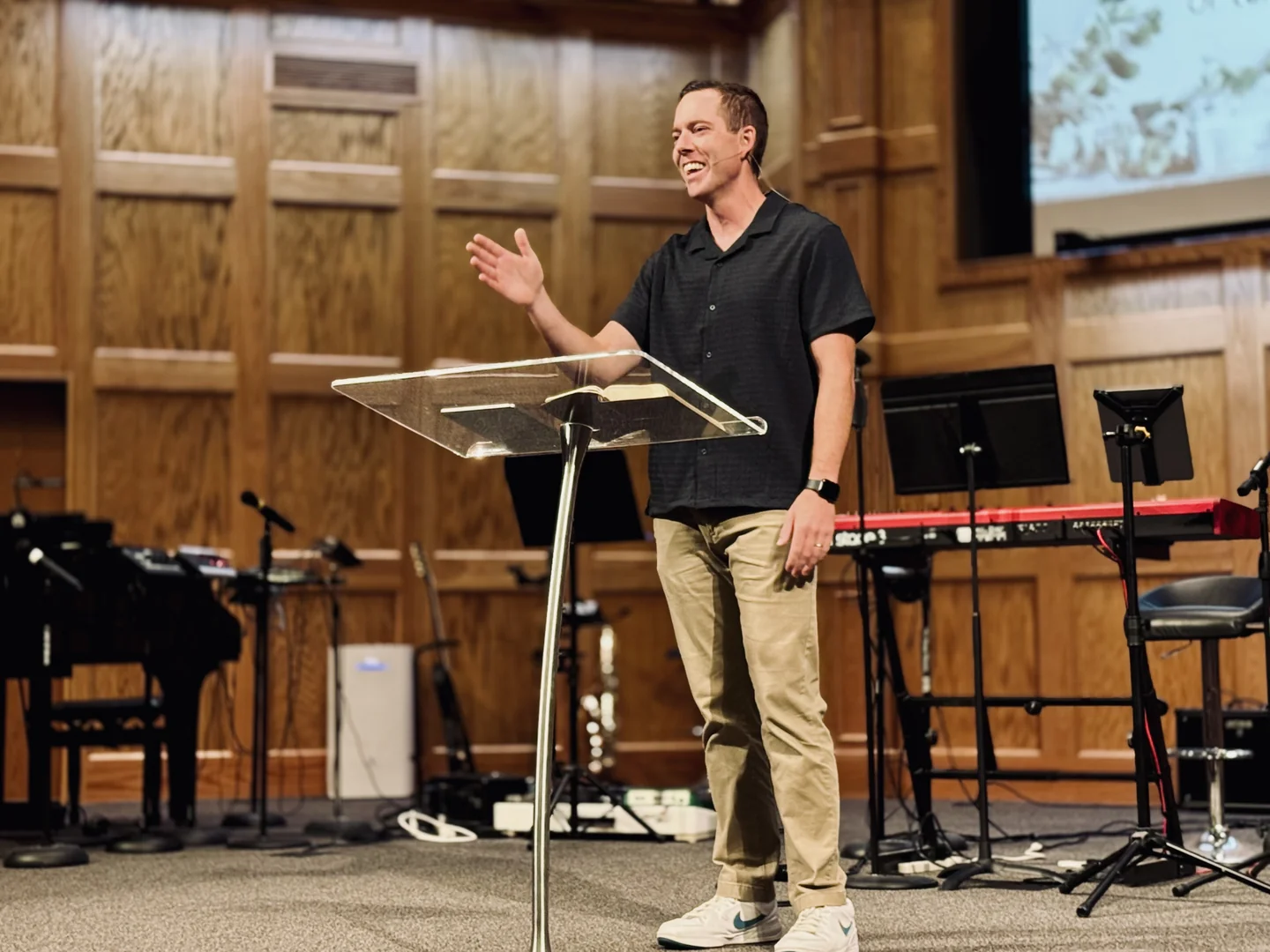
Sermon
I wonder how many of us have ever said, “I just can’t forgive them.”
When I was a kid, my brother and I fought like cats and dogs at times.
How many of you did that with your siblings?
One time, my brother really got one over on me.
He called my name and said, “Jeremy, let me tell you a secret.”
Of course, I wanted to know the secret. So I bent down to receive from him a prized secret.
As I bent my head down, he took his hand back and slapped me across the face!
To be fair, I know I had that coming.
But I was angry!
I had been deceived, and I had fallen for it hook, line, and sinker!
It’s funny to look back on now, but at the time I wanted vengeance. I had been wronged and wounded.
People often say, “time heals all wounds.” But I've found that to not be true.
Certainly, giving something some time can help subside some of the pain, but I’ve frequently seen where time doesn’t heal the wound; it allows time for the wound to fester.
That’s because the problem isn’t time.
The problem is it still feels like they owe you something.
An apology, justice, acknowledgment, the relationship they broke.
You know what?
Jesus says you’re right.
One of the truths of The Lord’s Prayer is that Jesus acknowledges certain conditions of humanity and invites us to submit those things to God in prayer.
Our need for a father.
Our need to live a life holy by hallowing God’s name.
Our need for daily bread.
Today we follow Jesus through this teaching as we learn about forgiveness. But not just forgiveness— the presence of offense in our lives.
Everyone of us has someone we believe owes us something.
Maybe they’re gone.
Maybe they’ve passed away, and that debt will never be settled.
Maybe they simply have no intention of ever making it right.
Yet somehow, we’re still trying to collect a debt that can never actually be repaid.
And that’s exhausting.
Read with me The Lord's Prayer:
“And he said to them, “When you pray, say: “Father, hallowed be your name. Your kingdom come. Give us each day our daily bread, and forgive us our sins, for we ourselves forgive everyone who is indebted to us. And lead us not into temptation.”” Luke 11:2-4 ESV
This morning, we ponder the role of forgiveness in our lives not only as it relates to us and God, but to us and one another.
“Forgive us our sins…”
Jesus begins with the most important relationship first. Before He ever talks about what others owe us, He reminds us what we owe God.
Luke uses the word Hamartia for the word sin.
It literally means to miss the mark, to fall short of God’s holiness.
Everyone of us has done it.
“For all have sinned and fall short of the glory of God,” Romans 3:23 ESV.
When it comes to our relationship with God, one sin is one sin too many.
Someone in this church told me a story about a plant that manufactured candy. One day, at that candy plant, someone lost a finger in the machinery.
The only way to deal with this was to dispose of literally truckloads of the candy. However, as the truckloads were being disposed of, someone saw the candy and ate some of it.
The odds were in their favor; they didn’t eat a finger, but no chances could be taken.
One sin is one sin too many, and so Jesus directs us to realize the first forgiveness we pray for is the forgiveness we need from our heavenly Father.
Here’s the reality of this that we’ll see in a minute.
We cannot give away what we have not already received.
First, we pray for God to forgive us, then Jesus calls us to…
“...for we ourselves forgive everyone who is indebted to us.”
When Luke records this, he changes the wording we find in Matthew.
Matthew uses the same word for sin as it relates to God and to other people.
Luke uses the word opheilonti translated as debt.
I believe this perfectly describes what it feels like when someone hurts us.
Think about this for a second.
When someone offends you, what is the first feeling after hurt? Debt.
You want an apology, you want trust restored, you want justice.
What Jesus acknowledges by teaching about forgiveness in this way is that the burden of unforgiveness is real, and Luke’s use of this word helps us understand why.
Here’s the hard part though:
Some debts can never be repaid.
No apology restores childhood.
No check restores trust.
No punishment gives you a loved one back.
Which means, eventually, forgiveness becomes something more than saying, “you’re forgiven.”
It becomes the surrendering of your right to collect what can never truly be repaid.
That’s exactly what God did for us.
Which leads us to the final movement.
Read this in its entirety with me:
“and forgive us our sins, for we ourselves forgive everyone who is indebted to us.” Luke 11:4A ESV
The structure of Jesus’ prayer that He taught us is intentional.
Notice that Jesus doesn’t tell us to forgive everyone so God will forgive you.
The rest of Scripture makes it abundantly clear forgiveness is a gift of grace through Christ.
What Jesus is describing is what should be the normal flow of life for someone who belongs to the kingdom.
Think about the order:
First, I recognize my guilt before God.
I realize that before I was ever offended, I was first an offender.
You and I have both sinned against a holy God.
Then God graciously forgives me.
Not because I deserve it, but because Jesus paid the debt I could never pay.
Once I experience that kind of mercy, it begins to change how I see the people who have hurt me.
We don’t forgive because they deserve it.
We forgive because I didn’t deserve God’s forgiveness either.
The Word of God says:
“Be kind to one another, tenderhearted, forgiving one another, as God in Christ forgave you.” Ephesians 4:32 ESV.
We forgive because we have experienced forgiveness.
It starts with receiving before it becomes releasing.
It begins with grace received before it becomes grace given.
Some of you have been waiting for the person who hurt you to make it right before you let it go.
But what if they never can?
What if they never apologize?
Some debts cannot be repaid even if that person spent a lifetime trying; they can only be healed by God.
So the question this morning isn’t whether someone has hurt you.
Jesus already knows they have.
The question is, whose debt are you still trying to collect?
Who came to your mind this morning as we’ve talked about forgiveness?
I didn’t have to tell you to think of someone.
The Holy Spirit already did.
Maybe it’s a parent.
Maybe it’s an ex-spouse.
Maybe it’s a former friend or boss.
Maybe it’s someone in this room.
And if you’re honest, you’re carrying around an unpaid invoice.
Here’s what makes this an act of insanity:
If we carry that invoice around, hoping for, demanding, and scheming for payment, the reality is we’re trying to collect a debt from someone who is just as bankrupt as us.
It comes to a point where we are going to have to trust God with the balance.
Imagine what kind of church we would be if we pursued this prayer every day.
Every morning we remembered, “I have been forgiven more than I can repay.”
And every afternoon we’d encounter someone who disappoints us.
Someone who speaks carelessly.
Someone who lets us down.
And instead of keeping a ledger, we would remember the cross.
Imagine the stress we wouldn’t carry.
Imagine the freedom we would live in as we remembered that we can trust God with the balance.